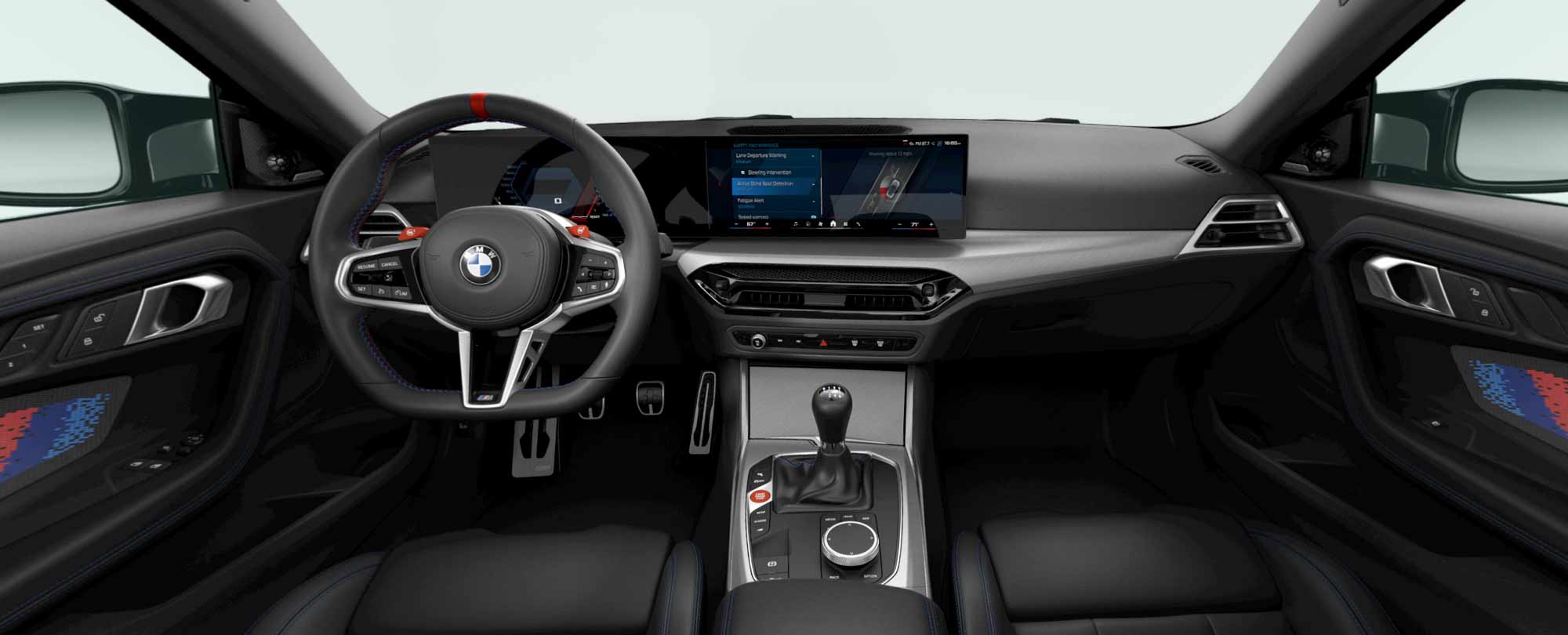
Picture this: 8,250 RPM on the tachometer, heel-toe downshift into turn two at Laguna Seca, the metallic click of the gear lever finding third. Your left foot dances on the clutch while your right blips the throttle. This is the BMW M experience that defined a generation—and it might be living on borrowed time.
The question isn't whether BMW will eventually eliminate manual transmissions from M cars. The question is when. And increasingly, all signs point to the G87 M2 being the final act.
The Manual M Legacy: From E30 to G87
BMW's M division built its reputation on the premise that driver engagement trumped outright speed. The E30 M3, launched in 1985, came exclusively with a five-speed manual. It wasn't just about performance metrics—it was about creating an extension of the driver's intentions.
The E46 M3 (2000-2006) refined this formula with its six-speed manual and the legendary S54B32 engine. Even as SMG (Sequential Manual Gearbox) technology arrived, the manual remained the enthusiast's choice. BMW understood this, keeping manual take rates around 50% in North America.
The E90/E92 M3 (2007-2013) marked a philosophical shift. The seven-speed DCT (Dual Clutch Transmission) offered objectively superior performance—quicker shifts, better lap times, more consistency. Yet BMW kept the six-speed manual, understanding that spreadsheet superiority doesn't capture the full M ownership experience.
With the F80 M3 (2014-2020), manual availability became increasingly region-specific. European markets saw minimal manual allocation, while North America maintained stronger demand. BMW's decision to offer a manual came with caveats—no Competition Package compatibility initially, limited production slots.
Enter the G80 M3 and G87 M2 generation. BMW made headlines by confirming manual availability, but the underlying message was clear: this is a concession to tradition, not a commitment to the future.
The Forces Killing Manual M Cars
Several converging factors are systematically eliminating manual transmissions from performance cars, and BMW M is not immune.
Emissions regulations present the most immediate threat. Modern automatics optimize shift points for emissions testing cycles. They maintain ideal RPM ranges, reduce fuel consumption during standardized tests, and integrate seamlessly with hybrid systems. A manual transmission, dependent on human input, cannot guarantee these efficiencies.
Performance metrics tell an uncomfortable truth. The current M3 Competition xDrive with its eight-speed automatic hits 60 mph in 3.4 seconds. The manual M3 requires 4.1 seconds. On track, the automatic consistently posts faster lap times. In an era where YouTube lap time comparisons drive purchase decisions, manufacturers can't ignore these disparities.
Customer demand data varies dramatically by market. While North American M2 buyers might see 40% manual take rates, global figures hover closer to 15-20%. BMW's production planning must accommodate global realities, not regional preferences.
Production economics compound these challenges. Developing and certifying a manual transmission for increasingly complex emissions standards requires significant investment. When that investment serves a shrinking customer base, the business case weakens.
Electrification strategy represents the final nail. BMW's commitment to electrify all M models by 2030 inherently excludes manual transmissions. Electric motors don't require multi-gear transmissions in the traditional sense, making manual gearboxes technically obsolete.
The G87 M2: BMW's Last Manual Stand
The G87 M2's manual availability feels less like a new chapter and more like an epilogue. BMW's decision to offer the six-speed stems from several calculated factors.
First, the M2 occupies a unique position as the entry-level M car, attracting younger enthusiasts and purists who prioritize engagement over outright performance. These buyers often represent future brand advocates—losing them carries long-term risks.
Second, the S58 engine's characteristics suit manual transmission driving. Unlike highly strung engines that require constant gear changes, the S58's torque delivery allows flexibility in gear selection, making manual driving more enjoyable in varied conditions.
Current estimates suggest 30-35% of North American G87 M2 orders specify the manual transmission. While respectable, this represents a decline from previous generations. More concerning are BMW executives' carefully worded statements about manual availability.
Frank van Meel, BMW M CEO, has consistently framed manual transmissions as "heritage" features rather than performance options. This positioning suggests BMW views manuals as temporary accommodations rather than permanent fixtures.
The G87's platform lifecycle offers another clue. Based on BMW's typical model cycles, the G87 should remain in production through 2028-2029. The next M2 generation will likely arrive as BMW fully commits to Neue Klasse architecture and widespread electrification.
Market Values and Collector Predictions
Understanding future collectibility requires analyzing current market trends and historical patterns. Manual M cars consistently command premiums in the used market, but not all models appreciate equally.
| Model | Production Years | Manual Availability | 15-Year Value Outlook |
|---|---|---|---|
| E46 M3 | 2000-2006 | Standard (SMG optional) | Strong appreciation, 150-200% of MSRP |
| E92 M3 | 2007-2013 | Optional (DCT available) | Moderate appreciation, 120-150% of MSRP |
| F80 M3 | 2014-2020 | Limited availability | Stable to slight appreciation, 100-130% of MSRP |
| G87 M2 | 2023-2029 (projected) | Optional | Strong appreciation potential, 140-180% of MSRP |
The E46 M3 demonstrates the ceiling for manual M car appreciation. Clean, low-mileage examples with manuals trade at substantial premiums over their SMG counterparts. The E92 M3 follows similar patterns, though DCT models maintain stronger values than SMG E46s due to superior technology.
The F80 M3 manual presents an interesting case. Limited production numbers and the absence of Competition Package compatibility initially hurt residual values. However, as the potentially penultimate manual M3, values are stabilizing and beginning upward trends.
For the G87 M2, being potentially the final manual M car creates unique dynamics. Early indicators suggest strong order interest in manuals, particularly in traditional BMW specification (non-Competition, rear-wheel drive). These base manual models may ultimately prove most collectible.
The Driving Experience Gap
Quantifying the manual versus automatic debate requires examining multiple perspectives beyond lap times.
Engagement factor: Manual transmissions demand constant driver involvement. This continuous interaction—clutch modulation, rev-matching, gear selection—creates deeper connection between driver and machine. Modern automatics, despite their competence, reduce drivers to partial participants.
Real-world speed: On public roads, manual transmissions often prove equally quick. Legal speed limits and traffic conditions neutralize automatic advantages. The manual's requirement for deliberate action can actually enhance safety through increased attention.
Track performance: Here, automatics dominate. Consistent shift times, optimal gear selection, and the ability to keep both hands on the wheel provide measurable advantages. For dedicated track cars, manual romanticism yields to competitive reality.
Emotional connection: This intangible factor drives manual preservation efforts. The physical act of shifting—the mechanical feedback, the skill requirement, the sense of control—creates memories that specification sheets cannot capture.
Modern M automatics deserve credit for their excellence. The current eight-speed unit delivers virtually instantaneous shifts, intelligent programming, and durability under extreme use. It's not that automatics are inferior—they're simply different tools optimizing different objectives.
The Electrification Reality
BMW's electrification roadmap presents insurmountable challenges for manual transmission survival. Electric motors generate maximum torque from zero RPM, eliminating the need for multiple gear ratios. While some manufacturers experiment with multi-speed electric drivetrains, these serve efficiency rather than engagement purposes.
The philosophical question becomes whether simulated manual modes could preserve some traditional experience. Porsche and others explore artificial sound and resistance to mimic engine characteristics. Could similar technology create synthetic clutch feel and gear changes?
Technical possibility aside, such systems would represent fundamental departure from manual transmission principles. The appeal lies not in the mere act of moving a lever, but in the mechanical connection and skill requirement. Simulation, however sophisticated, cannot replicate authenticity.
BMW M's identity must evolve beyond traditional metrics. As performance differentiators narrow—when every electric M car achieves sub-three-second acceleration—brands must find new ways to create distinction. This evolution likely excludes manual transmissions, regardless of enthusiast sentiment.
The Verdict: A Calculated Sunset
Based on regulatory pressures, market dynamics, and BMW's strategic direction, the G87 M2 almost certainly represents the final manual M car. The timeline appears clear: manual availability through the G87's lifecycle (ending 2028-2029), followed by complete transition to electrified, automatic-only M vehicles.
This reality demands different approaches for different buyers:
Daily drivers should honestly assess their requirements. If you commute in traffic or prioritize comfort, modern automatics offer superior experiences. Don't buy a manual for image—buy it for use.
Weekend enthusiasts face the strongest case for manual ownership. If driving enjoyment trumps ultimate performance, and you can dedicate appropriate time to the experience, the G87 manual delivers unique satisfaction unavailable elsewhere.
Investment collectors must balance emotional and financial factors. The G87 manual will likely appreciate, but not immediately. Plan for 10-15 year holding periods. Maintain meticulously, drive sparingly, and preserve documentation. Consider ordering new to ensure perfect provenance.
The Last Dance
The manual BMW M car's demise isn't tragedy—it's evolution. These machines served their purpose brilliantly, creating generations of driving enthusiasts and establishing BMW M's reputation. That chapter is closing not from failure, but from changing definitions of performance and engagement.
For those who understand what we're losing, the G87 M2 represents a final opportunity. Not everyone needs or wants a manual transmission, and that's perfectly acceptable. But for those who do, the clock is ticking.
The question isn't whether you should mourn the manual's passing. The question is whether you'll take one last dance before the music stops.