Ask any independent BMW specialist what brings cars into the shop most often, and the cooling system will be near the top of the list. Modern BMWs rely on lightweight plastic and composite cooling components that are excellent when new but become predictable wear items as they age and heat-cycle. The good news is that because the failures are predictable, they are also preventable — and getting ahead of them is one of the highest-value things a BMW owner can do.
This guide explains why BMW cooling systems fail, walks through each component that commonly wears out, describes the warning signs, explains why overheating is so dangerous on these engines, and lays out a sensible prevention strategy.
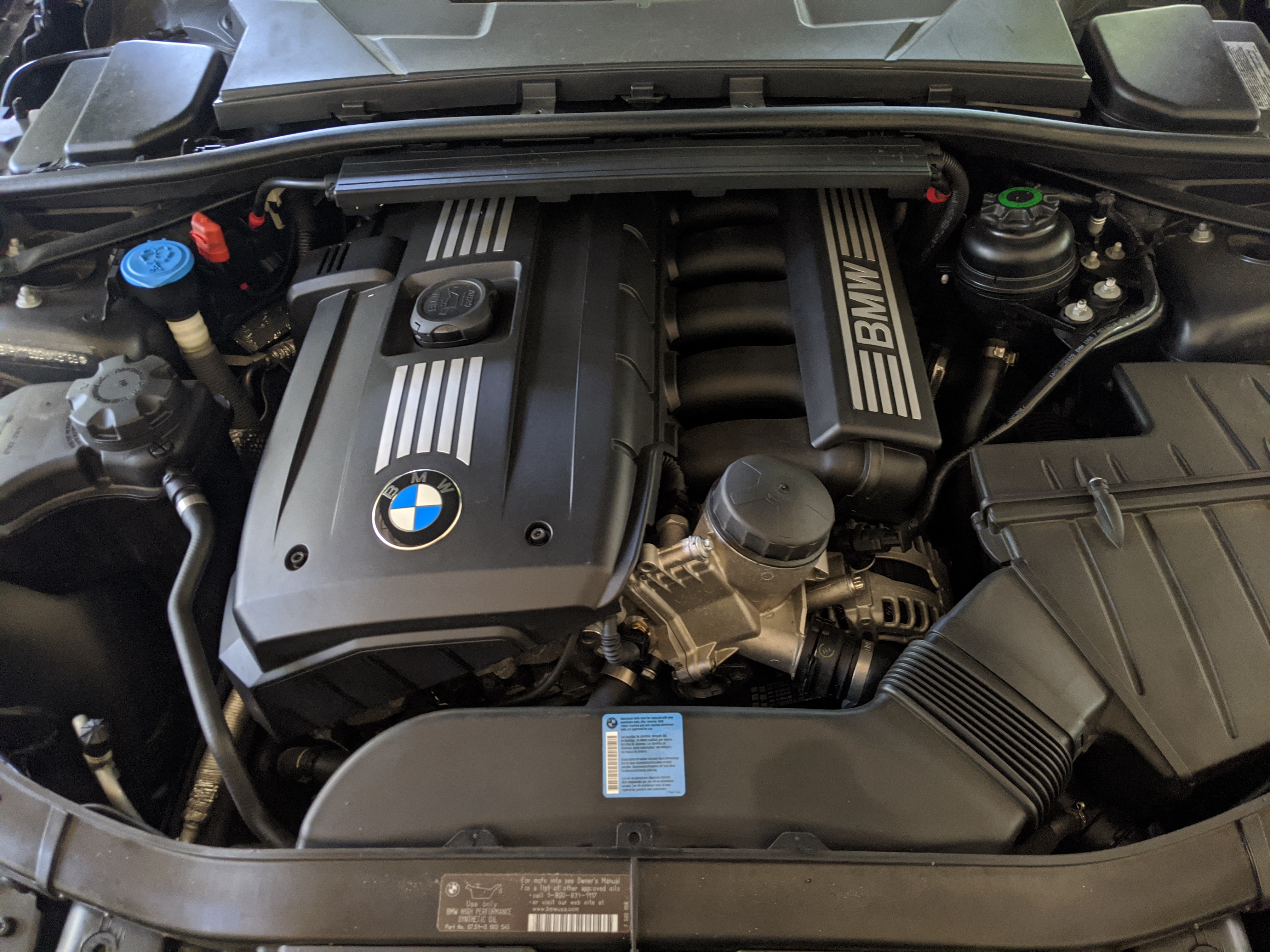
Why BMW uses plastic in the cooling system
It is easy to blame "cheap plastic," but the engineering reasoning is sound: composite components are lighter, resist corrosion far better than metal, and can be moulded into complex shapes that integrate several functions at once. When new, they work beautifully. The trade-off is longevity — years of heat cycling gradually make the plastics brittle, and eventually they crack or the internal seals give up. It is less a defect than a service-life limitation, which is exactly why a proactive approach works so well.
The components that fail — and how
Electric water pump
Many BMW six-cylinder engines use an electrically driven coolant pump rather than a belt-driven one. It offers precise temperature control, but when it fails it can do so suddenly and without much warning, triggering an overheat and limp mode. On higher-mileage cars it is one of the most important components to consider replacing proactively, often alongside the thermostat.
Thermostat
The thermostat regulates coolant flow to keep the engine in its ideal temperature range. When it sticks closed the engine overheats; stuck open, it runs too cool, hurting efficiency and triggering fault codes. On many engines it is replaced together with the water pump since the labour overlaps.
Expansion tank (coolant reservoir)
The plastic expansion tank is under constant pressure and heat, and over time it cracks — often along a moulding seam — and weeps coolant. A failing cap on the tank can also cause pressure problems. It is a common and relatively inexpensive item.
Hoses, elbows and coolant necks
Rubber hoses harden and the plastic connection necks and elbows become brittle, eventually splitting. These failures often appear as slow leaks or sudden coolant loss.
Radiator
The radiator's plastic end tanks can crack on high-mileage cars, and the core can clog or leak over time.

Warning signs to take seriously
Cooling problems give warnings if you know what to watch for:
- A temperature gauge that climbs higher than normal or behaves erratically
- Low-coolant warnings or the need to top up regularly
- A sweet smell (coolant) after driving, or visible steam
- White or coloured residue around hose connections and the expansion tank
- Puddles or drips under the front of the car
- Cabin heat that becomes inconsistent
Any of these deserves prompt attention. Catching a weeping expansion tank early is a cheap fix; ignoring it until it fails on the motorway is not.
Why overheating is so dangerous on BMW engines
This is the part that turns a modest repair into a catastrophic one. Many BMW engines use aluminium blocks and heads that do not tolerate serious overheating well. A single significant overheat can warp the cylinder head or damage the head gasket, turning a job that might have cost a few hundred to prevent into one that costs thousands to repair. This asymmetry — cheap to prevent, expensive to fix — is the entire argument for staying ahead of the cooling system.
The proactive overhaul strategy
The smart approach on a higher-mileage BMW is not to replace parts one at a time as they fail, but to perform a proactive cooling refresh: water pump, thermostat, expansion tank and cap, and the main hoses, done together before they fail. There are three reasons this makes sense:
- Labour overlap. Many of these components share access, so doing them together saves on repeated labour.
- Coolant savings. You only drain and refill the system once.
- Peace of mind. You convert an unpredictable roadside-failure risk into a planned maintenance event.
Because exact intervals and the correct part revisions vary by engine and model year, confirm the right components and timing for your specific car with a qualified technician or against factory documentation.

Notes by engine family
Different engines have slightly different cooling architectures — the electric-pump sixes, the turbocharged fours, and the V8s each have their own specifics and known items. The principle is the same across all of them: plastic components have a service life, and planned replacement beats reactive failure. Identify your exact engine before ordering parts.
What a proactive cooling refresh includes
When a specialist quotes a "cooling system overhaul" on a higher-mileage BMW six, they are typically bundling several of these components into one job: the electric water pump and its thermostat, the expansion tank and cap, the upper and lower radiator hoses and any brittle plastic coolant necks, and a full coolant flush and refill to the correct specification. On some cars the radiator itself is added if it shows its age. Doing them together is not upselling — it is the sensible way to reset the entire system's service clock at once, rather than paying repeated labour and coolant charges as each part fails individually over the following years.
DIY versus the shop
An experienced home mechanic can tackle much of a cooling refresh, and doing so saves considerable labour. That said, there are real cautions: bleeding air out of a BMW cooling system correctly is essential — trapped air causes hot spots and can itself lead to an overheat — and some cars require a specific bleeding procedure or a scan tool to run the electric pump during the bleed. If you are not confident in the bleeding process for your specific model, this is a job worth handing to someone who is. A perfect parts job undone by a bad bleed helps no one.
What to do if your BMW overheats
If the temperature gauge climbs into the red or you get an overheat warning, treat it as urgent. Where it is safe to do so, reduce load, pull over, and switch the engine off to prevent heat damage — continuing to drive a seriously overheating BMW risks warping the head. Do not open a hot, pressurised cooling system; let it cool first. Then have the cause diagnosed before driving again. The few minutes of inconvenience of stopping are trivial next to the cost of a head gasket or a warped head, which is the very failure the whole proactive strategy exists to avoid.
Frequently asked questions
How often should I refresh the cooling system? There is no single number — it depends on the engine, climate and history — but many specialists plan a refresh in the higher-mileage range rather than waiting for failure.
Can I keep driving with a small coolant leak? Not safely. Small leaks become big ones, and overheating risk on these engines is severe. Investigate promptly.
What coolant does my BMW use? BMW specifies particular coolant types by era; using the correct specification matters. Confirm the right fluid for your car before topping up.
Why does BMW use plastic parts that fail? Composite parts are lighter and resist corrosion; the trade-off is a finite service life. It is a design compromise, not a defect — which is why planned replacement works so well.
Is a slightly high temperature gauge an emergency? Treat any abnormal rise seriously. These engines do not tolerate overheating, and catching a problem early is the difference between a cheap fix and a head repair.
The bottom line
The BMW cooling system is not a mystery or a design failure — it is a set of components with a predictable service life, in an engine that punishes overheating severely. That combination is exactly why the smart money treats cooling proactively rather than reactively. Learn the warning signs, respect a rising temperature gauge, and plan a comprehensive refresh on a higher-mileage car before the plastic decides the timing for you. Do that, and you sidestep the single most common — and most avoidable — way that BMW ownership turns expensive.
Know exactly what you're working with
Before you buy, tune or repair, confirm the exact engine, chassis and factory build of your specific car. Guessing from a badge or a model year is how people end up ordering the wrong parts or buying a car that is not what the advert claimed. Decode your VIN to verify precisely what you have — the engine, the chassis generation, the transmission and the factory options — then read your window-sticker option codes in the Codex to understand how the car was originally equipped.
From there, the BMW DNA encyclopedia lets you trace the full lineage of your engine, chassis and drivetrain and understand how your car fits into BMW's engineering story — why it was built the way it was, what it replaced, and what came after it. It is the context that turns a spec sheet into genuine understanding.
Keep exploring
Deepen your BMW knowledge with more DreamBMW guides: the N54 vs N55 and N52 vs N54 engine comparisons, the B58 engine guide, our walkthrough of BMW cooling system failures and how to get ahead of them, the truth about the ZF 8HP automatic and which BMW transmission to choose, the oil filter housing gasket leak and walnut blasting explainers, how xDrive works, and our buyer's guide to the most reliable used BMWs.
This guide is a reference for BMW owners and enthusiasts, not a repair manual. Specifications, intervals and procedures vary by model year and market — always confirm against factory documentation or a qualified BMW technician before carrying out any work.